Launch offer — valid today only

📄 Digital book in PDF · read it on your phone or print it

The EMT Cognitive Exam, From Scene Size-Up to Trauma, in Drawings Every Call in the Same Order

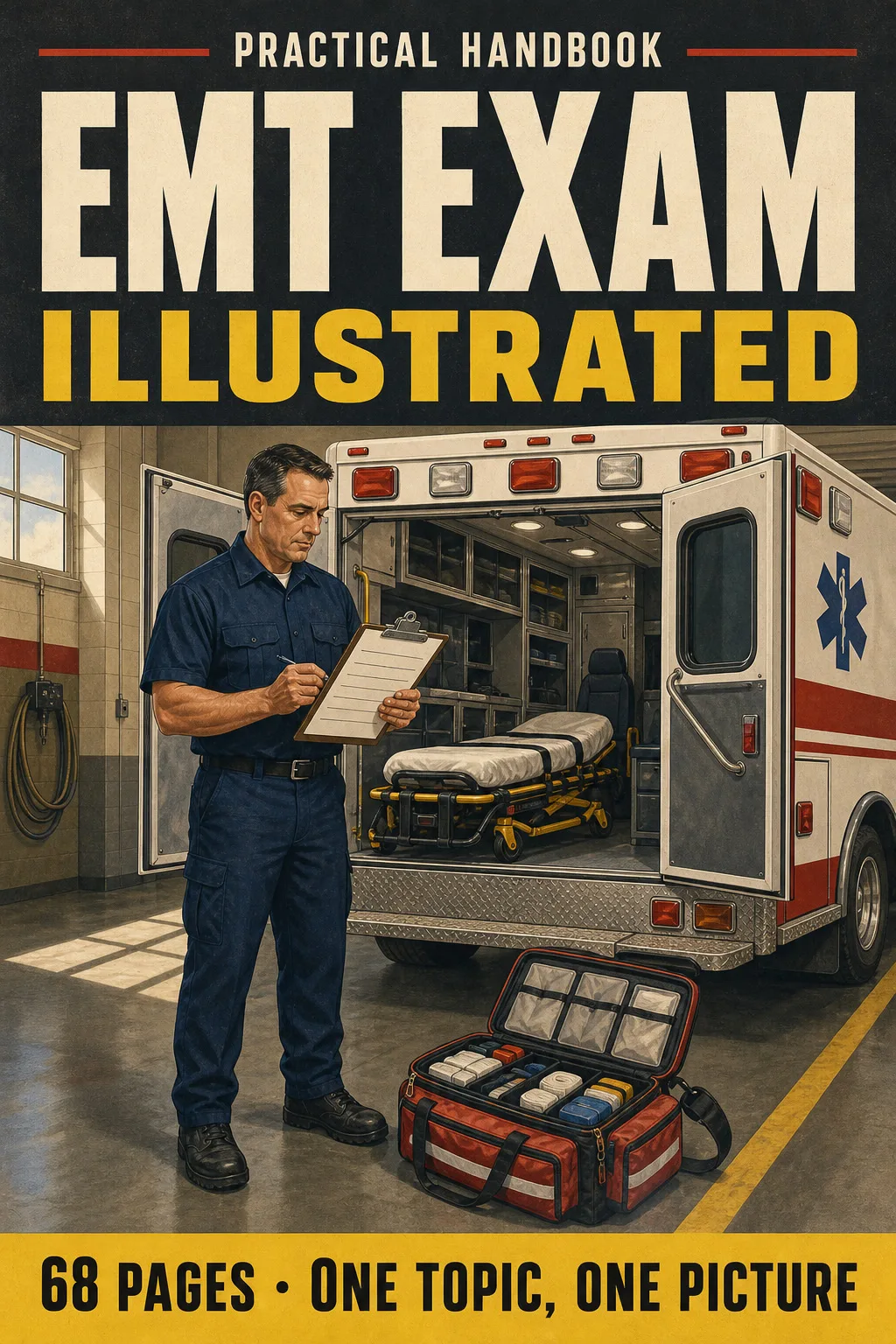
Scene size-up, patient assessment, airway, CPR and the AED, bleeding and shock, trauma, medical calls, childbirth and START triage. Each topic gets its own page: the drawing first, then what you need to remember. 68 illustrated pages.

I WANT EMT EXAM ILLUSTRATED

🔒 Secure checkout · PDF by email · 30-day guarantee
Every topic, its own pageEach sequence drawn, with the explanation right beside it
68 illustrated pages9 parts, from what an EMT does to the night-before checklist
Up-to-date sourcesNREMT exam outline, National EMS Education Standards and current AHA guidelines
PDF by emailFormat

Look Inside the Book

Every page has one big drawing and a box with the numbers and steps you need to know:

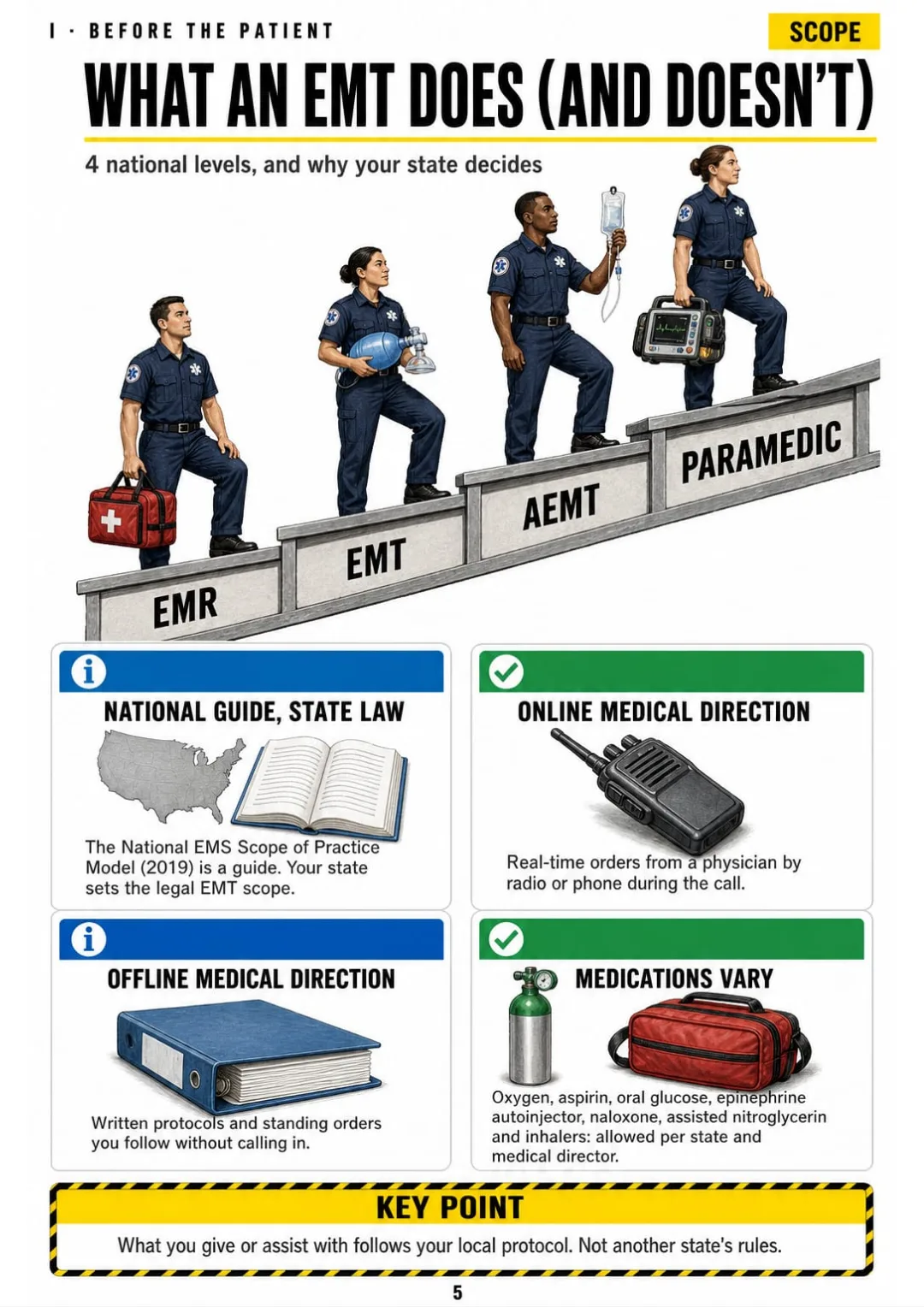
EMR, EMT, AEMT, paramedic: your state and medical director set the EMT scope.
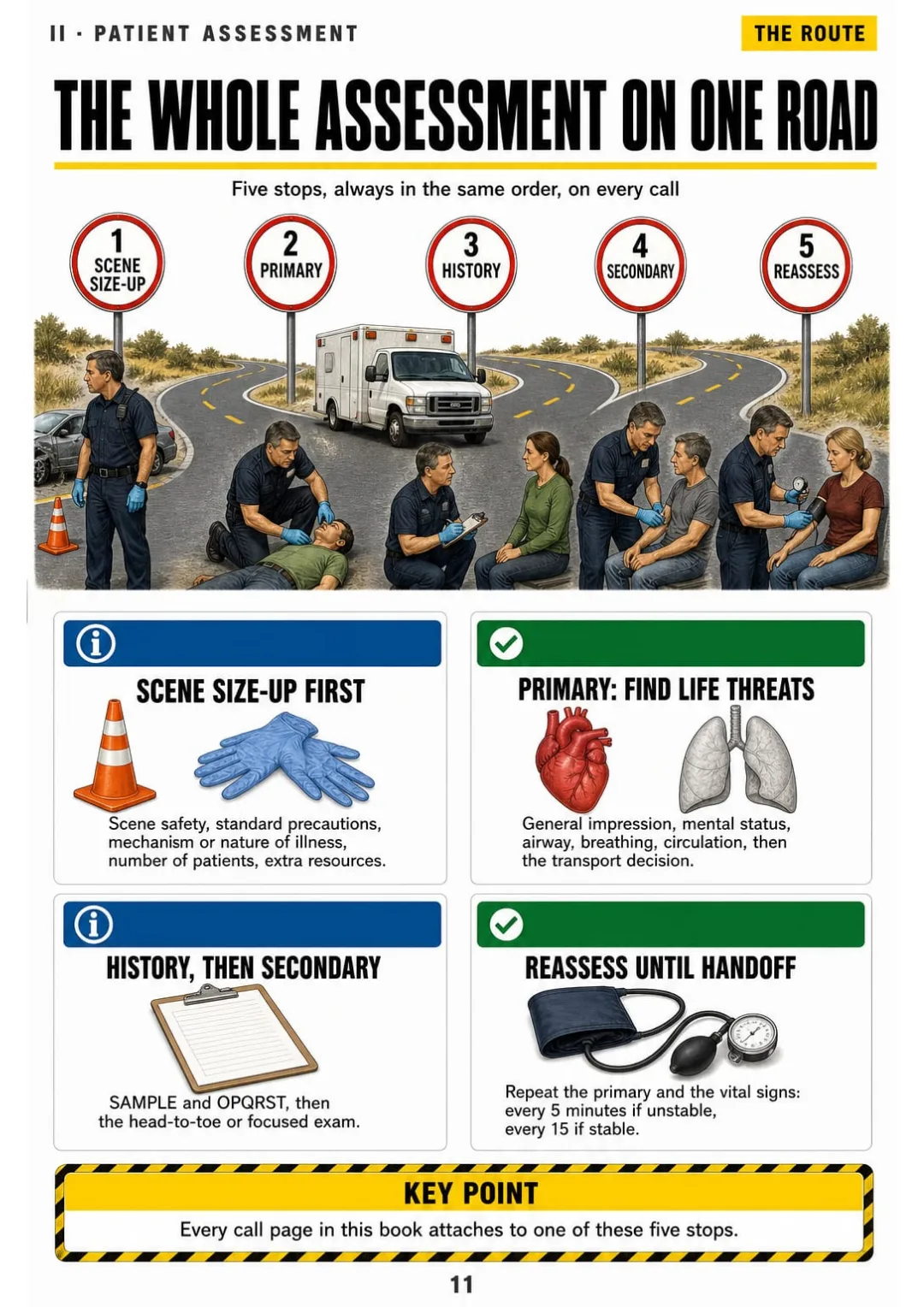
Scene size-up → primary → history → secondary → reassessment, on one drawn road.
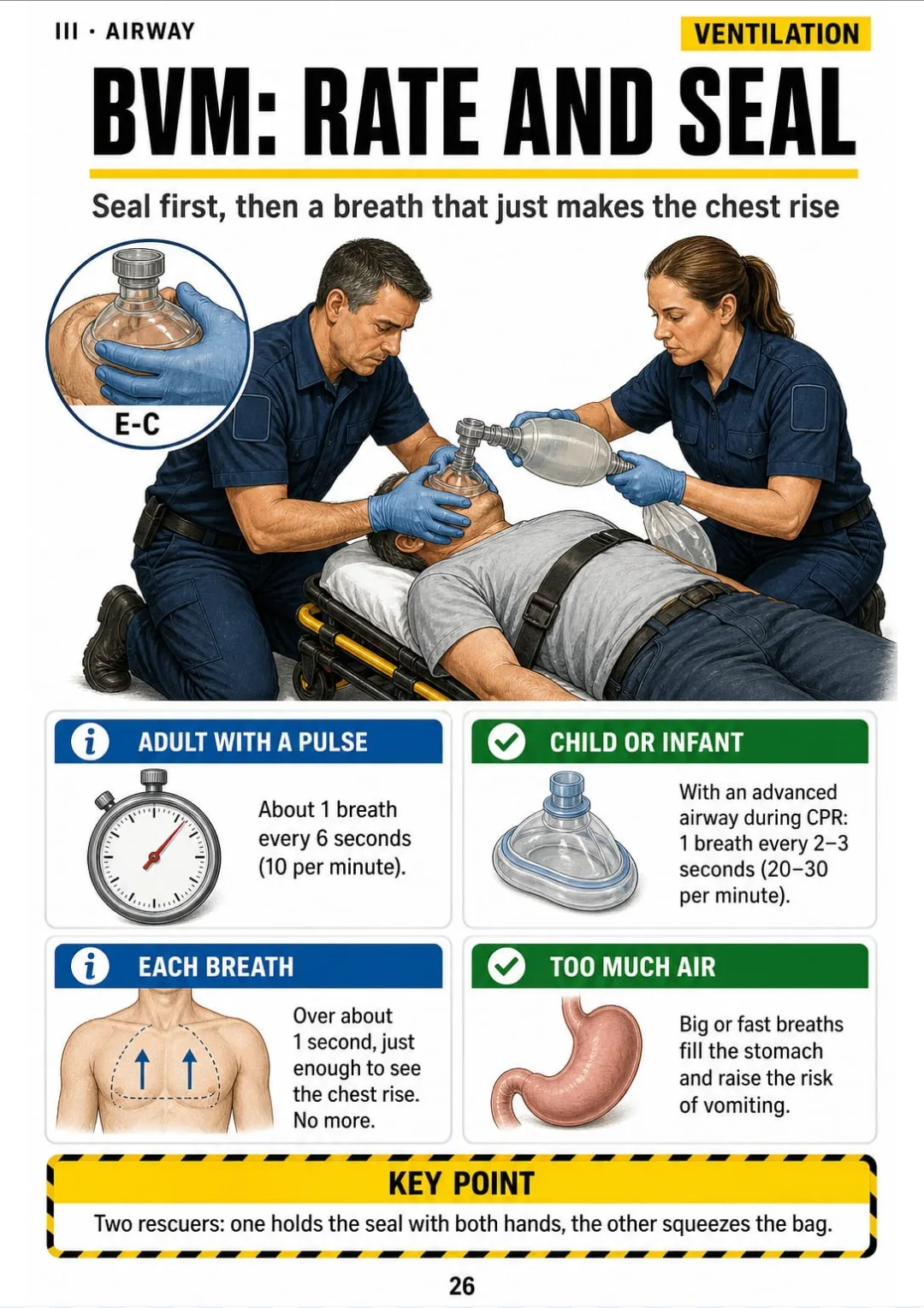
Two-person BVM with the E-C grip: 1 breath every 6 seconds in adults.
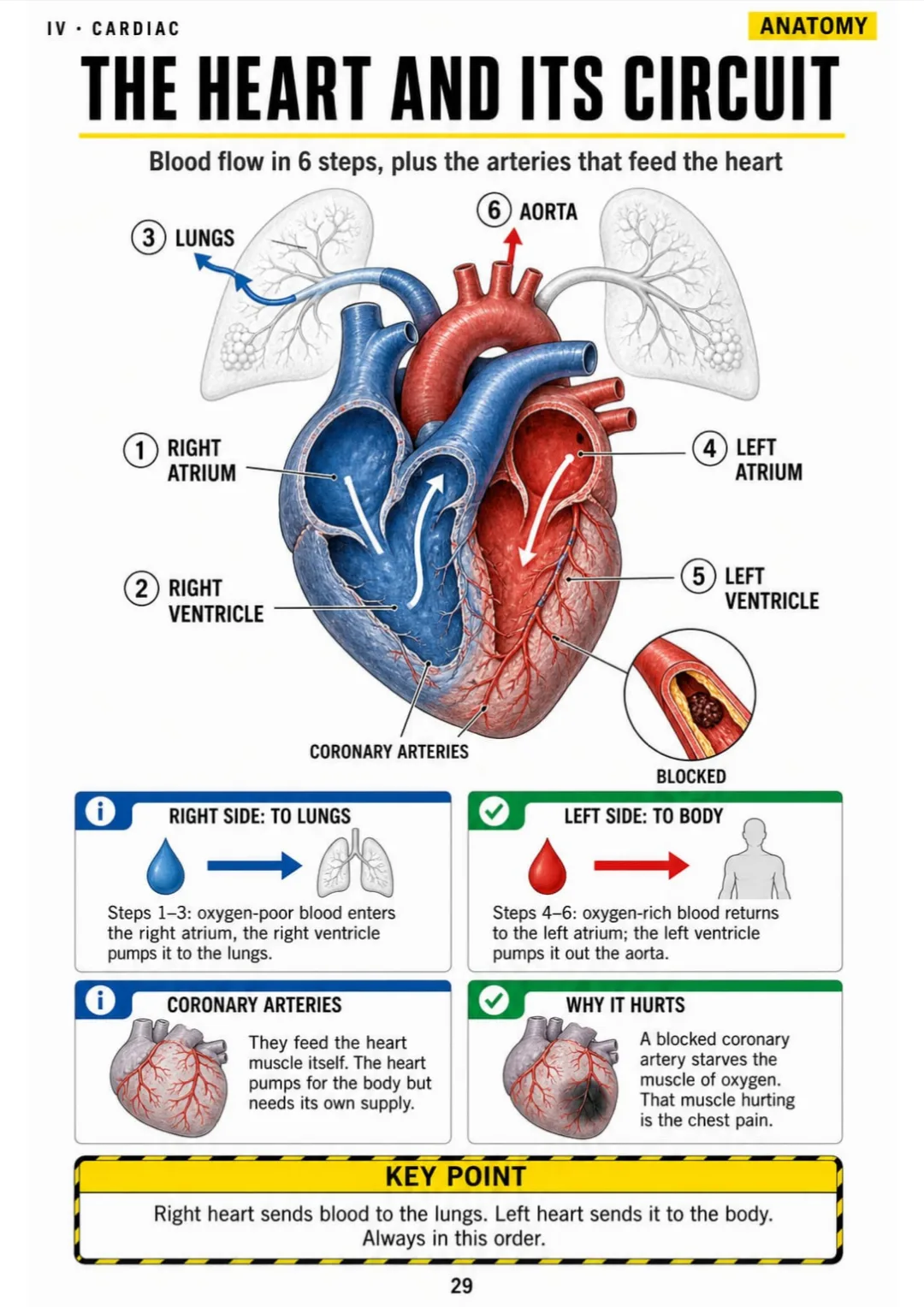
Right atrium → right ventricle → lungs → left atrium → left ventricle → aorta.
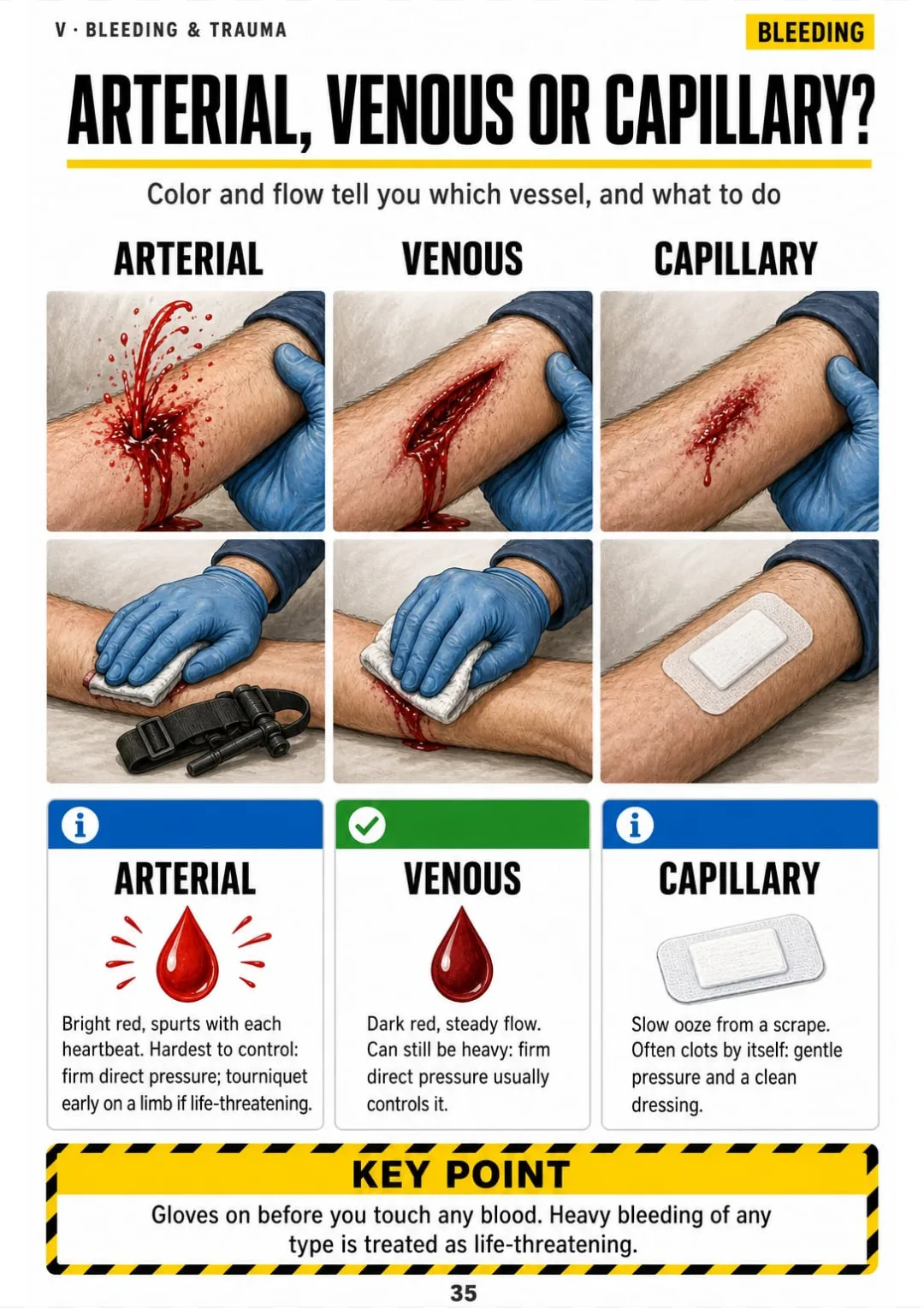
Arterial spurts bright red, venous flows dark red, capillary oozes.
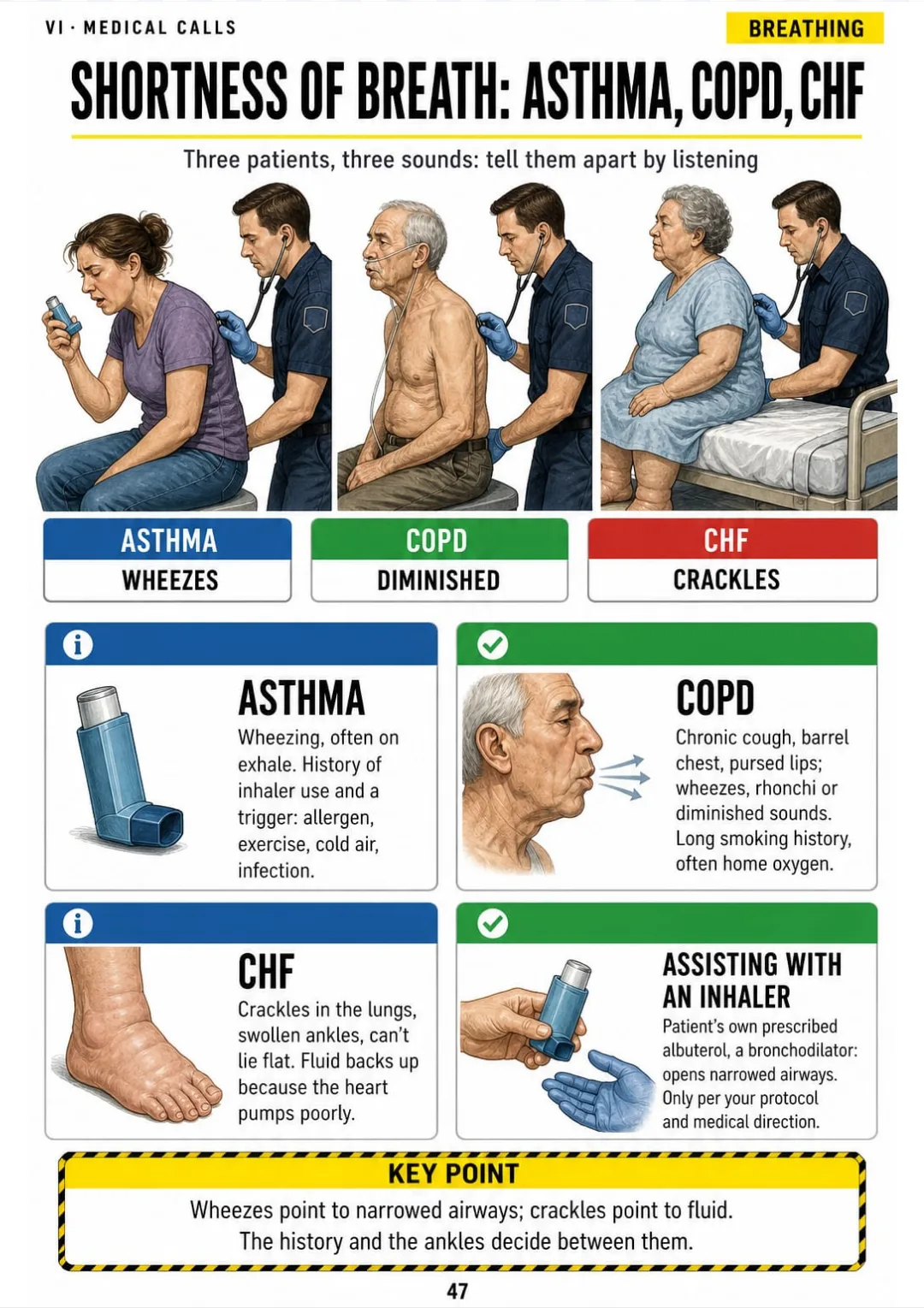
Wheezes, barrel chest or crackles plus swollen ankles: three short-of-breath patients side by side.
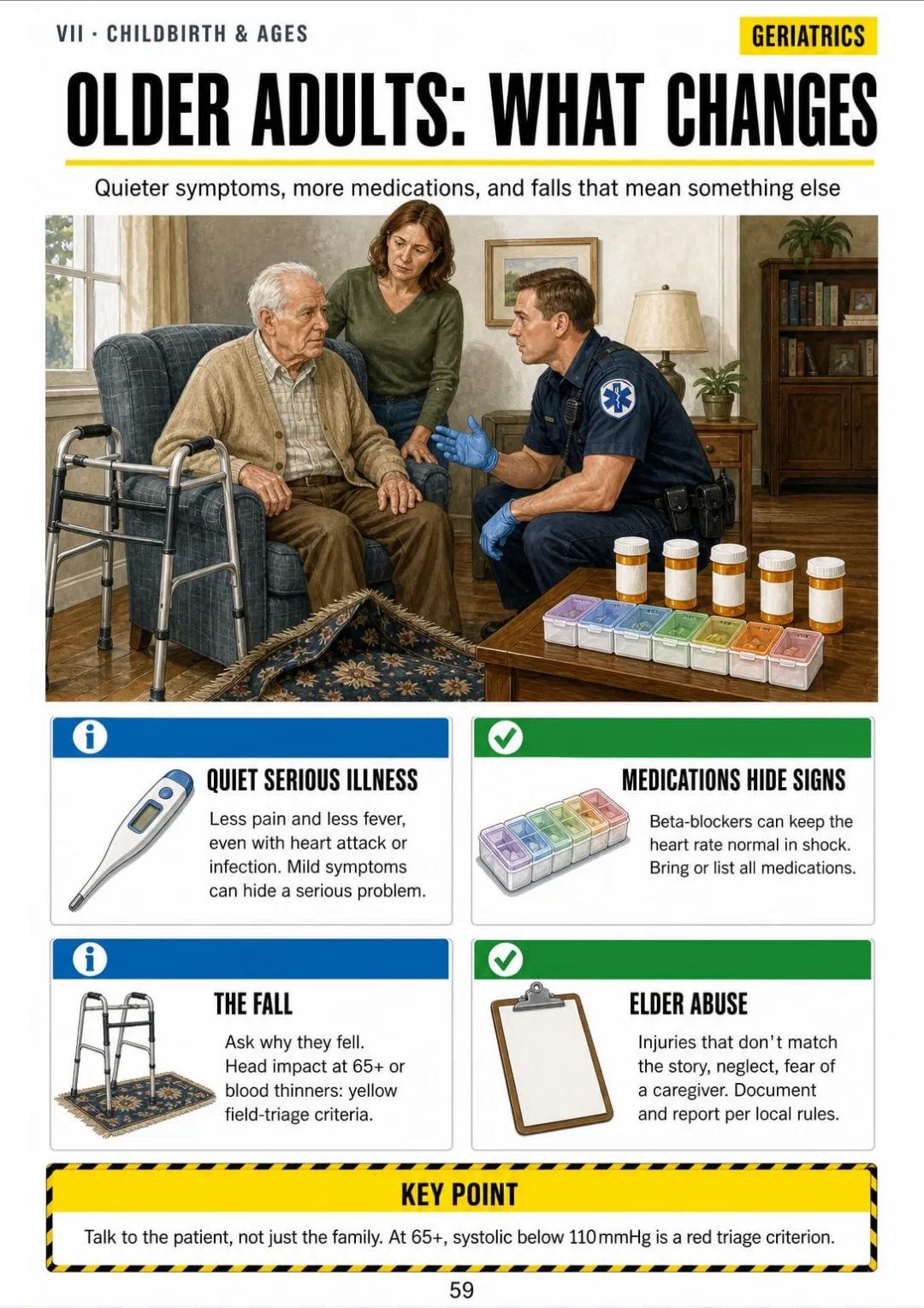
Older adults: less pain and fever, beta-blockers mask tachycardia, systolic below 110 at 65+ is red.
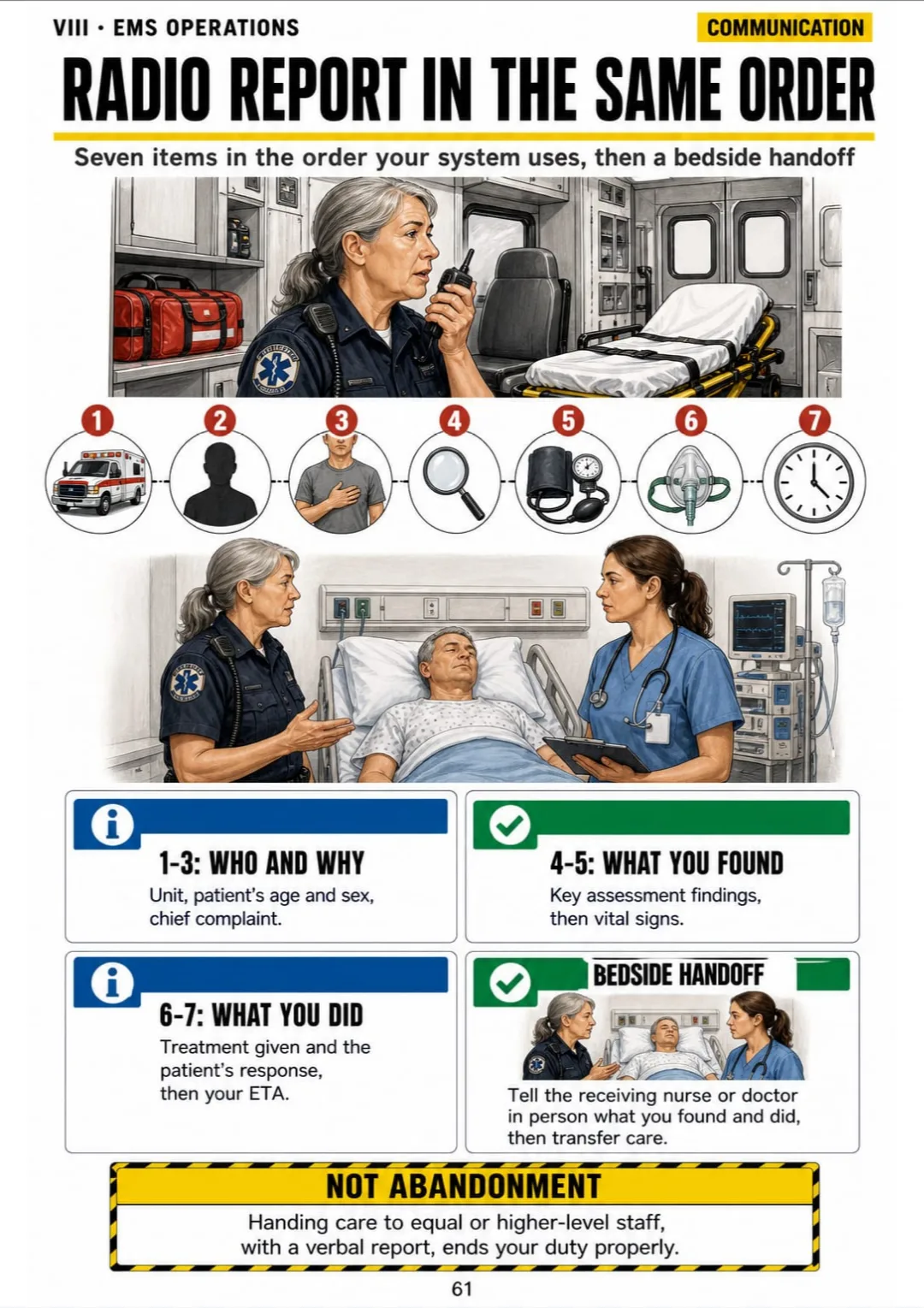
Unit, age and sex, complaint, findings, vitals, treatment and response, ETA.

Swipe to see more →

These are real pages from the book. The table of contents is the full one: 9 parts and 64 topics.

The Problem Isn't You. It's How It Was Explained to You.

It's 9 p.m. in EMT class and the instructor asks: where does the upper airway end, and how is a child's airway different? You read it last night, and nothing comes.

The textbook spreads it over pages of paragraphs: nose, pharynx, larynx, trachea, bronchi, alveoli, with the pediatric differences tucked in the middle. After a full day of work, it's just words in a row.

Two-person BVM with the E-C grip: 1 breath every 6 seconds in adults.

In this book the airway is one page: a drawing from the nose down to the alveoli, upper airway on one side of the line, lower airway on the other, and the 3 ways a child's airway differs in a box right next to it.

The heart and its circuit, the three kinds of bleeding, asthma vs COPD vs CHF, the stages of childbirth, safe lifting: each one has its own page, drawn the same way.

You see it, you get it, and the next time someone asks, you answer without opening the textbook.

COMPARE FOR YOURSELF

The Same Topic, Two Ways to Study It

THIS
  • The textbook: line after line
  • Assessment steps explained only in words
  • Apps: hundreds of questions, no order behind them
Patient assessment is a systematic process that begins prior to patient contact with the scene size-up, during which the EMT evaluates scene safety, determines the mechanism of injury or nature of illness, establishes the number of patients and the need for additional resources, and applies standard precautions. This is followed by the primary assessment, intended to identify and manage immediate life threats, after which the history is obtained, the secondary assessment is performed as indicated, and reassessment continues at defined intervals throughout transport.
FOR THIS
  • The whole assessment drawn as one road
  • The steps in a box, in order
  • One order behind every question, so you see why you missed it
Scene size-up → primary → history → secondary → reassessment, on one drawn road.
CONTENTS

Take a Look at the 9 Parts and 64 Topics

Before the patient, patient assessment, airway, cardiac emergencies, bleeding and trauma, medical calls, childbirth and children, EMS operations and a final review: 68 pages, all illustrated

IBefore You Touch the Patient · pp. 5-10
  1. What an EMT Does (and Doesn't)
  2. Standard Precautions: Gloves First, Every Time
  3. Scene Size-Up in 5 Checks
  4. Consent, Refusal and Abandonment
  5. Body Words the Exam Uses
  6. Normal Vital Signs: Adult, Child, Infant
IIPatient Assessment: One Fixed Order · pp. 11-19
  1. The Whole Assessment on One Road
  2. General Impression and AVPU
  3. Bleeding or Airway First?
  4. Primary Assessment: Airway and Breathing
  5. Primary Assessment: Circulation and Skin
  6. Priority Patient: Transport Now
  7. SAMPLE and OPQRST
  8. Secondary Assessment: DCAP-BTLS Head to Toe
  9. Glasgow Coma Scale: 3 to 15
IIIAirway, Breathing and Ventilation · pp. 20-28
  1. The Airway From Nose to Alveoli
  2. Head-Tilt Chin-Lift or Jaw Thrust
  3. Suctioning: How Long, How Deep
  4. OPA vs NPA: Size and When
  5. Adequate or Inadequate Breathing?
  6. Oxygen Devices and SpO2
  7. BVM: Rate and Seal
  8. CPAP: Who Gets It and Who Doesn't
  9. Choking: Adult, Child, Infant
IVCardiac Emergencies and Resuscitation · pp. 29-34
  1. The Heart and Its Circuit
  2. Chest Pain That Doesn't Look Like Chest Pain
  3. Aspirin and Nitroglycerin: What They Do
  4. Cardiac Arrest and the Chain of Survival
  5. High-Quality CPR in Numbers
  6. AED: The Same Steps Every Time
VBleeding, Shock and Trauma · pp. 35-46
  1. Arterial, Venous or Capillary?
  2. Stop the Bleed: Pressure, Then Tourniquet
  3. Shock: 4 Types, 1 Problem
  4. Compensated vs Decompensated Shock
  5. Field Triage: When to Go to a Trauma Center
  6. Head Injury: Signs That Get Worse
  7. Spinal Motion Restriction
  8. Chest Trauma: Open Wound and Tension
  9. Abdominal Injuries and Evisceration
  10. Fractures and Splinting
  11. Burns: Rule of Nines and Depth
  12. Heat and Cold Emergencies
VIMedical Calls · pp. 47-54
  1. Shortness of Breath: Asthma, COPD, CHF
  2. Altered Mental Status: AEIOU-TIPS
  3. Low or High Blood Sugar?
  4. Seizures: Protect, Time, Reassess
  5. Stroke: BE-FAST and Last Known Well
  6. Allergic Reaction or Anaphylaxis?
  7. Opioid Overdose and Poisoning
  8. Behavioral Emergencies: Safety First
VIIChildbirth, Children and Older Adults · pp. 55-59
  1. Childbirth: 3 Stages and When to Stay
  2. Newborn Care and APGAR
  3. Pediatric Assessment Triangle
  4. Children Are Not Small Adults
  5. Older Adults: What Changes
VIIIEMS Operations · pp. 60-63
  1. Lifting and Moving Without Getting Hurt
  2. Radio Report and Handoff
  3. MCI: START Triage in 4 Colors
  4. Hazmat: Hot, Warm and Cold Zones
IXFinal Review · pp. 64-68
  1. How the EMT Exam Asks
  2. Words That Change the Answer
  3. The Most Common Assessment Mistakes
  4. All the Key Numbers on One Page
  5. Checklist for the Night Before

One Page, One Topic, All Clear

Think of it this way:

It's your first ride-along. The patient is on the kitchen floor and the preceptor turns to you: "Go ahead, start your assessment."

In the book you open the page on the whole assessment and see one drawn road: scene size-up, primary, history, secondary, reassessment, always in that order.

Arterial spurts bright red, venous flows dark red, capillary oozes.

And the question that freezes everyone, airway or bleeding first, has its own page on that same road. So do CPR and the AED, shock and stroke, each one drawn the same way.

EMT Exam Illustrated is 9 parts and 64 topics, all drawn, with a final review of the key numbers and how the exam asks.

What you see drawn, you don't have to memorize.

What's Inside EMT Exam Illustrated:

Ipp. 5-10

Before You Touch the Patient

What an EMT does and doesn't, gloves first, scene size-up in 5 checks, consent and refusal, the body words the exam uses and normal vitals for adult, child and infant.

IIpp. 11-19

Patient Assessment: One Fixed Order

The whole assessment on one road, AVPU, bleeding or airway first, the primary survey, priority patients, SAMPLE and OPQRST, DCAP-BTLS and the Glasgow scale.

IIIpp. 20-28

Airway, Breathing and Ventilation

The airway from nose to alveoli, head-tilt or jaw thrust, suctioning, OPA and NPA, oxygen and SpO2, the BVM, CPAP and choking at every age.

IVpp. 29-34

Cardiac Emergencies and Resuscitation

The heart and its circuit, chest pain that doesn't look like it, aspirin and nitroglycerin, the chain of survival, high-quality CPR and the AED.

Vpp. 35-46

Bleeding, Shock and Trauma

Three kinds of bleeding, pressure and tourniquet, shock, field triage, head, spine, chest and abdominal injuries, splinting, burns, heat and cold.

VIpp. 47-54

Medical Calls

Asthma, COPD and CHF, AEIOU-TIPS, low or high blood sugar, seizures, stroke with BE-FAST, anaphylaxis, opioid overdose and behavioral calls.

VIIpp. 55-59

Childbirth, Children and Older Adults

Childbirth in 3 stages, newborn care and APGAR, the pediatric assessment triangle, how children differ and what changes in older adults.

VIIIpp. 60-63

EMS Operations

Lifting and moving safely, the radio report and handoff, START triage in 4 colors and hazmat zones.

IXpp. 64-68

Final Review

How the exam asks, words that change the answer, common assessment mistakes, all the key numbers on one page and a night-before checklist.

At the end of the book: Exam-style questions with answers and all the key numbers on one page.

Plus: 2 Free Books

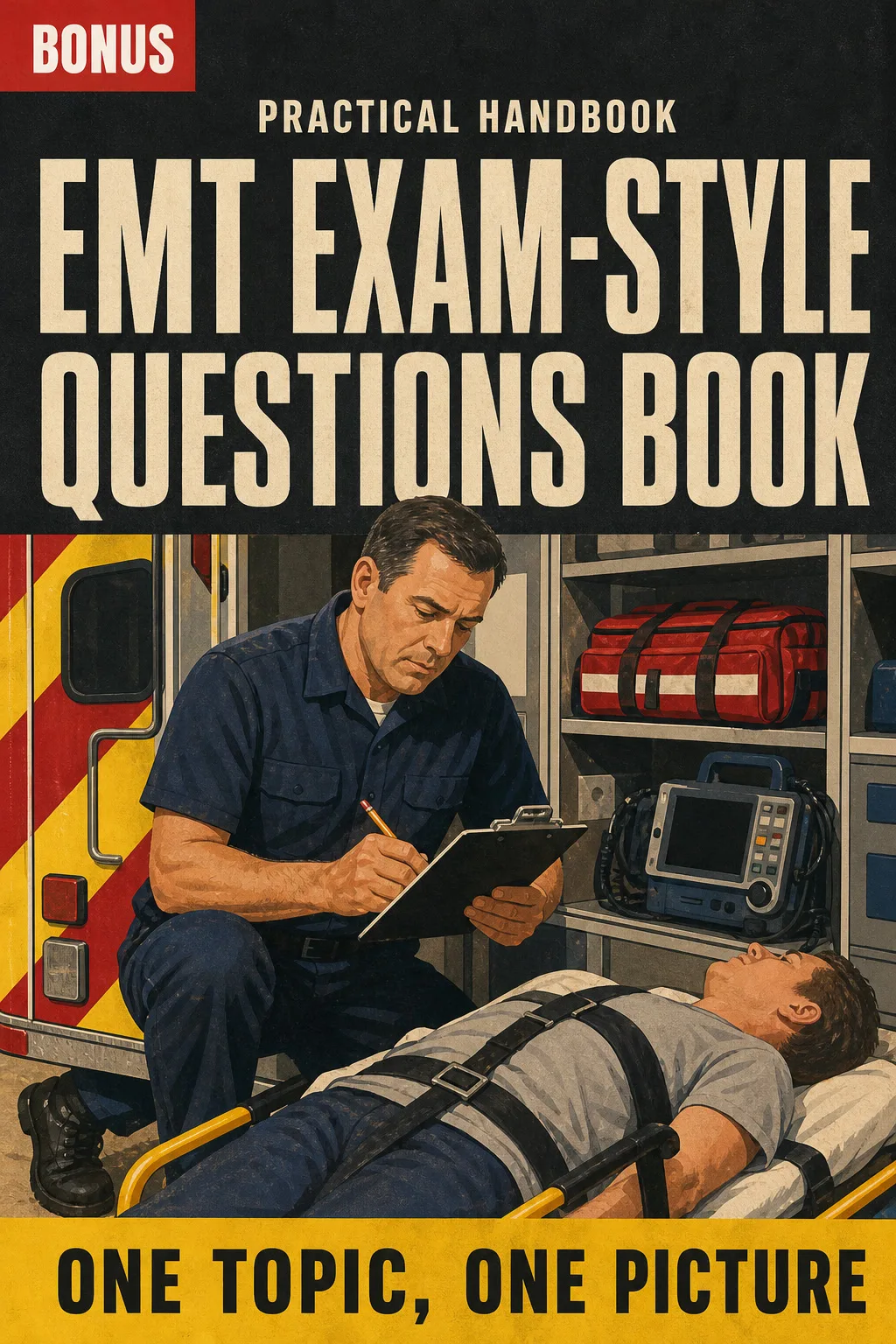
EMT Exam-Style Questions Book

BONUS 1: «EMT Exam-Style Questions Book»

Value on its own: US$ 17.90

Practice with exam-style questions by topic, each with the answer and a one-line reason, so you learn why an answer is right instead of memorizing it.

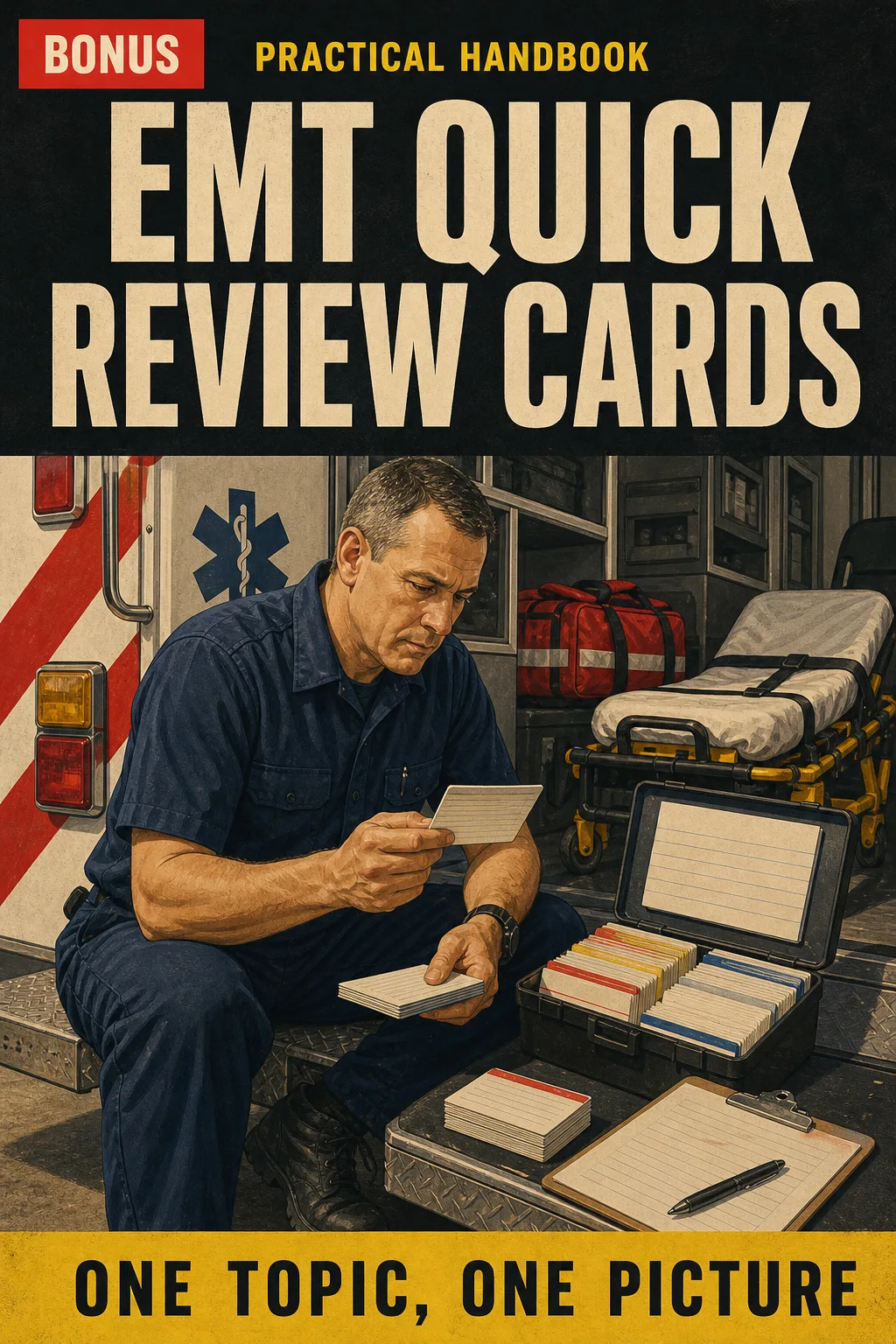
EMT Quick Review Cards

BONUS 2: «EMT Quick Review Cards»

Value on its own: US$ 14.90

Every key sequence and sign on one printable card, to review in ten minutes before class, a shift or the exam.

EMT Exam Illustrated with 2 Free Books

  • EMT Exam Illustrated: 68 illustrated pagesUS$ 63
  • BONUS 1: EMT Exam-Style Questions BookUS$ 17.90
  • BONUS 2: EMT Quick Review CardsUS$ 14.90
  • High-resolution PDF to printIncluded
Total value US$ 95.80
YOUR PRICE:
US$ 27
You save US$ 68.80
YES, I WANT EMT EXAM ILLUSTRATED FOR US$ 27

📄 This is a digital PDF book sent to your email: nothing is printed or shipped.

Secure purchaseEncrypted payment30-day guarantee

PDF by email: We email you EMT Exam Illustrated as a PDF, together with the two free books. It's a single payment: no installments, no extra charges.

Who This Book Is For

You're in your EMT course

You're in your EMT course

Every chapter you read at night has its own drawn page, so the next morning you see it again at a glance.

Your exam date is set

Your exam date is set

The final review, all the key numbers on one page and exam-style questions with the reason behind each answer.

You're already on a rig or a fire crew

You're already on a rig or a fire crew

The assessment in the same order every time, printed and kept close to review before a shift.

Everything You Get Today

US$ 95.80US$ 27
YES, I WANT EMT EXAM ILLUSTRATED FOR US$ 27

📄 This is a digital PDF book sent to your email: nothing is printed or shipped.

30DAYS
GUARANTEE

30-Day Guarantee

Try EMT Exam Illustrated for 30 days, bonus books included.

We refund everything if the file won't open, if the book isn't what you see here, if you were charged twice or if the email doesn't arrive. Just email us.

You pay once. No subscriptions.

Frequently Asked Questions

Is it for me if I'm changing careers or haven't studied in years?

Yes. It starts from what an EMT does and builds everything on one assessment order. If you've already finished your course, it works as a visual review of what the exam covers.

Does it work for my state's EMT exam?

It follows the NREMT EMT cognitive exam content outline, the National EMS Education Standards, the current AHA CPR and ECC guidelines and the national field triage guidelines. Local protocols can differ by state and agency: in the field, always follow yours and your medical director.

Is this official material?

No. It's an independent study aid, not affiliated with or endorsed by the NREMT, NHTSA or the American Heart Association.

Does it replace my EMT course?

No. It doesn't replace your approved course, your skills practice, your local protocols or your medical director, and it isn't medical advice. It gives no certificate and no CE hours: it helps you study and review what you learn there.

Are the practice questions the ones on the exam?

No. They're written for this book in the exam's style, each with the answer and the reason. They're not real exam questions.

When and how do I get it?

As a PDF by email, together with the 2 bonus books, to the address you enter at checkout.

Do I have to pay every month?

No. It's a one-time payment, with no subscription.

Can I have it on paper?

Yes. It's a printable PDF: print it at home or at a print shop, the whole book or just the pages you need.

How does the refund work?

You have 30 days. We refund everything if the file won't open, if the book isn't what you see on this page, if you were charged twice or if the email doesn't arrive: just email us.

Before You Close This Page

No more rereading chapters that don't stick.

The whole patient assessment: you see it drawn and it's clear.

You walk into the exam knowing where everything goes.

Drawings make studying faster.

The book is right below.

One-time payment: US$ 27 · Guarantee: 30 days · PDF by email

YES, I WANT EMT EXAM ILLUSTRATED FOR US$ 27

📄 This is a digital PDF book sent to your email: nothing is printed or shipped.